

Three Steps Saint Paul Can Take to Unleash Small Business and Investment Potential
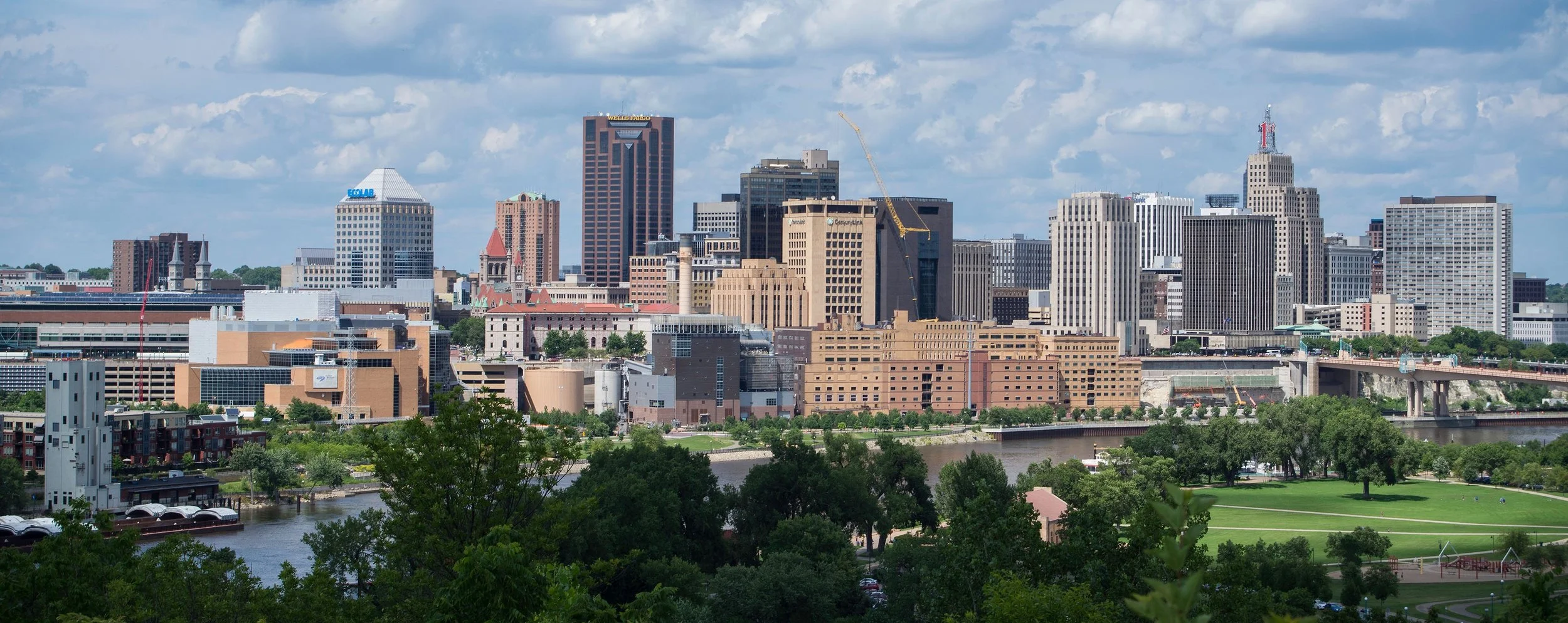
Saint Paul (photo: stpaul.gov)
By Scott Burns
In 2000, I was sitting in a small office in Lowertown when Sean Kershaw from the City of Saint Paul’s Planning and Economic Development office walked in on what was just an impromptu tour of companies in the building. We had already launched a company that posted compliance information online. That meeting with Sean validated a larger idea we had to serve governments directly and led to GovDelivery, which grew to employee over one thousand people, including many in Saint Paul and the Twin Cities. Government helped make that possible and it started with Sean’s visit and a simple question: How can I help?
The government can't always help a business directly because not many companies have government as the customer. What the government can do is create a platform for success and investment in an area. Yet, too often, entrepreneurs and investors in Saint Paul have experienced government as a blocker instead.
Over the past 25 years, I have worked with local, state, and national governments across the United States and Europe. Their policies and structures vary, but the experience of working with them often comes down to one question:
Does the government want you to succeed, or does it simply want to administer its rules?
Rules matter. They protect public safety, workers, consumers, neighborhoods, and the environment. But administering rules is not the ultimate purpose of government. Producing good public outcomes is.
In his book We the Possibility, Harvard Business School professor and former Boston city official Mitchell Weiss draws a distinction between “probability government” and “possibility government.”
Probability government relies on established approaches that are relatively safe but often produce, in Weiss’s words, “middling or mediocre outcomes.” Possibility government opens itself to new ideas, tests new approaches, learns from the results, and expands the ideas that work.
At the local level in Saint Paul, this view of government’s role and our civic possibilities is showing up in the work of Sustain Saint. Paul to promote urban vitality as an engine for prosperity. This mission truly epitomizes an outcomes-oriented, "possibility," way of thinking for our civic and government leaders. In a world that is changing at an exponential pace, incrementalism is not a conservative and reliable approach as it might have been in the past. It is more likely a path to collective failure.
There are three ways Saint Paul and other governments can be truly results-oriented in supporting the entrepreneurs and investors that help create the thriving economy and urban vitality we all want and deserve:
1. Our government should care about the success of investors and entrepreneurs and must show it in how it gets work done
When you apply for a permit, the City should help you get the application right. When you say you need a liquor license by August 1, someone should help you understand what must happen, who is responsible for each step, and whether that deadline is realistic. When sidewalk or street construction threatens access to your restaurant, the City should consider the survival of your business part of the project plan.
These expectations sound basic. They are not consistently met.
I spoke with a restaurant owner in Union Park who struggled for months to obtain a liquor license for a location that had previously held one. I watched Grand Avenue remain torn up, sometimes with little visible activity, while nearby businesses lost traffic and customers. We have also seen how Saint Paul’s original rent-control ordinance created new restrictions and uncertainty for housing providers and discouraged investment in new housing.
These situations are different, but they have something important in common. In each case, the government process can become separated from the outcome. The permit is reviewed. The construction contract is administered. The regulation is enforced. From inside the system, the work may appear to be getting done. From the business owner’s perspective, the restaurant may be running out of money.
It is easy for a public employee to fall into the trap of thinking that turning something down is just as successful an outcome as helping it get approved. In either case, the file can be closed. For the city, however, those outcomes are dramatically different.
The goal should be to get to yes as quickly as possible whenever a proposal is lawful, safe, and consistent with reasonable public objectives. When the answer must be no, the applicant should receive a prompt explanation and help finding a workable alternative.
This does not mean eliminating regulations or giving businesses special treatment. It means recognizing that someone who wants to open a store, build housing, renovate an old property, or start a company is trying to create something of value in our community.
They should be treated as a partner in Saint Paul’s success.
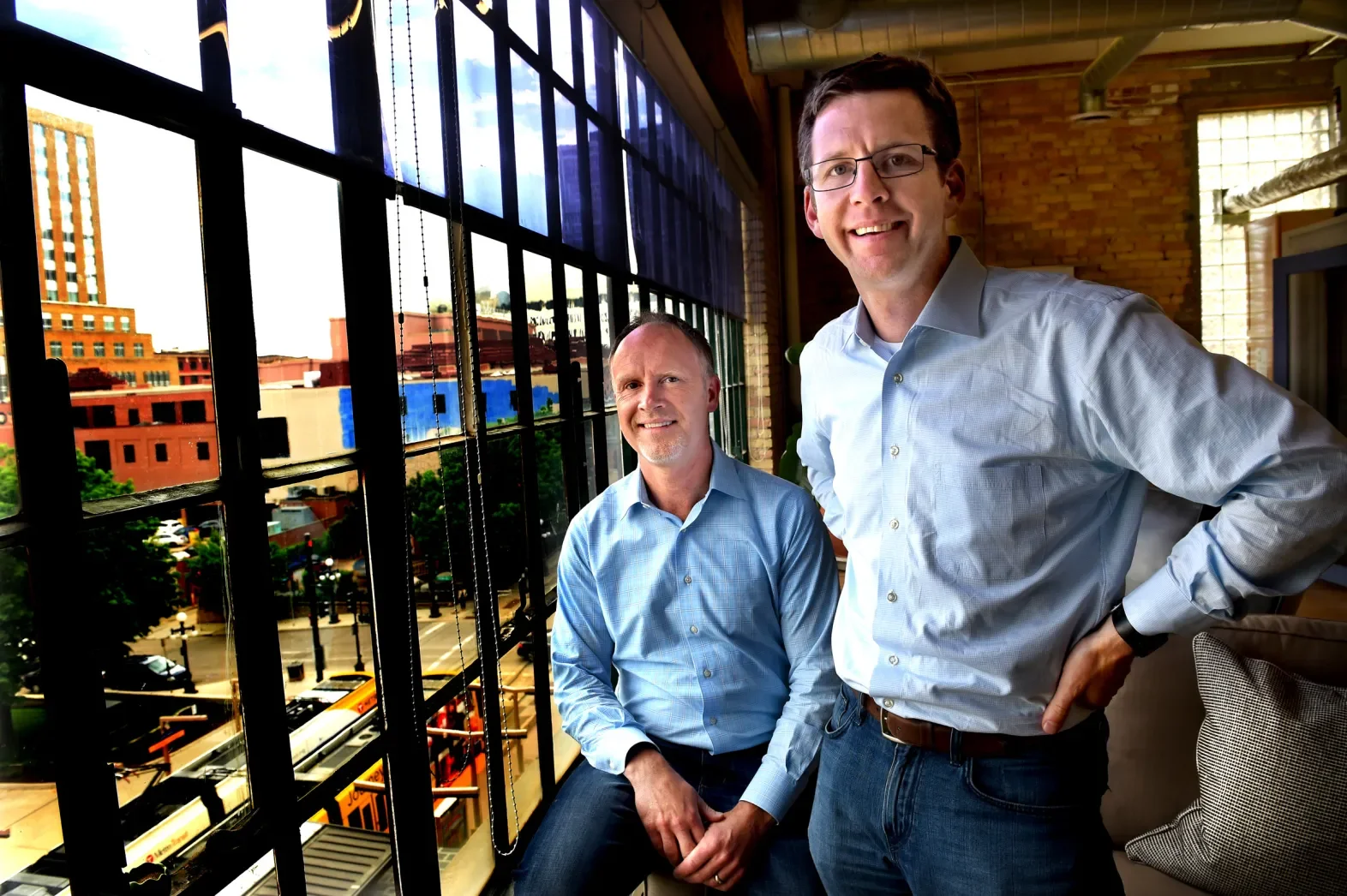
Scott Burns (author) and co-founder Chip House in 2017 in downtown Saint Paul. Photo: Jean Pieri / Pioneer Press
2. Our government should hold itself accountable
In the private sector, service-level agreements (SLAs) define response times and performance expectations. Governments routinely require them from vendors, and I have signed many.
Government should establish the same clear expectations for itself.
If a retailer reports repeated shoplifting or threatening behavior, the owner should know what response to expect and what additional options are available. If someone applies for a zoning variance, building permit, inspection, or liquor license, that person should know where the application stands, who is responsible for it, and when a decision is likely.
Saint Paul already publishes estimated timelines for some approvals. Its business guide says that a zoning review can take anywhere from the same day to three weeks. A variance or use change may add three to six weeks. A building plan review generally takes four to six weeks, while some business licenses can take 90 days or more.
Providing estimates is useful, but an estimate is not an SLA.
The City should publish specific service standards for its major business-facing processes:
How quickly an application will be acknowledged
When the applicant will receive an initial review
How long a standard approval should take
Who is responsible for moving it forward
How applicants can escalate a stalled case
How often the City meets its published standards
The City should then report its actual performance publicly and work to speed up processes and create provisional approvals and other new approaches to accelerate processes that slow down investment, business openings, and hiring.
Saint Paul’s new PAULIE permitting and licensing system is a promising step. It allows applicants to submit materials, receive updates, and track progress online. But a better tracking system is only the beginning. Technology can show someone that an application has been sitting in the same place for four weeks. An accountable service culture prevents it from sitting there in the first place.
Not every application can be approved, and complicated projects will sometimes take longer. But uncertainty should be the exception, not the operating model.
Time is money for a small-business owner. A month without a permit can mean another month of rent, interest, insurance, and payroll without revenue. Delays that look minor from inside City Hall can exhaust an entrepreneur’s savings or make an otherwise viable project impossible to finance.
Government delays create something that can be referred to as a “Time Tax” (see the recent book on this topic by Annie Lowrey called “The Time Tax: How Government Wastes our Time and How to Fix It”) that can affect anyone working with the government who has to stand in line, fill out an unnecessarily complex form or wait for an answer as it makes its way through staff, commissions, and City Councils). With investors and entrepreneurs, this time tax can be a fatal blow to a project or a business.
The same goes for ineffective staff. It is essential that we have the same high standards in the public sector as private companies face when they struggle to deliver for customers. If an employee or team is not proactive and efficient services in their role, we should expect our government leaders and managers to step in, adjust processes, and shift goals to align with public outcomes.
To underscore the accountability we all have to do our jobs well, we should never treat public employment as a guaranteed jobs program because the dollars that fund it are earned through the risk and hard work of the citizens served.
3. Our government should attract excellence by getting the big things and the little things right
If someone agrees to open a business, build housing, lease office space, or operate a store in Saint Paul, that person needs to be able to count on the basics.
Roads and sidewalks need to be maintained. Snow needs to be cleared. Customers and employees need to feel safe. Shoplifting and destructive behavior need a timely response. Families should be able to visit a commercial district without navigating aggressive behavior or clouds of marijuana smoke. Employees should be able to use transit safely and comfortably. We should not have anyone in our community living or engaging in illegal activity in public spaces.
None of these concerns should be treated as trivial or intolerant. They influence real decisions about where people shop, work, open businesses, and invest money.
They also relate directly to Sustain Saint Paul’s goals. A walkable neighborhood cannot thrive if its sidewalks are inaccessible. Transit-oriented development will not achieve its potential if employees do not feel safe using transit. Dense, mixed-use neighborhoods produce economic, environmental, and fiscal benefits only when the public spaces around them work.
Saint Paul can get these details right. One interesting example is the Downtown Improvement District (DID) which was formed outside of government but with the collaboration of government partners, to step in and provide enhanced safety and cleaning services across a 90-block area in Downtown. Private building owners agreed to step in and pay extra to support initiatives the government itself was not taking on effectively. According to the Saint Paul Downtown Alliance, one ambassador alone cleared 290 snow-covered corners, collected more than 73,000 pieces of litter, and participated in 188 graffiti-removal projects. Those may sound like little things. Collectively, they help determine whether downtown feels welcoming for investment.
Our governments should bring that same results-oriented focus to everything it does and make the need for ad hoc initiatives like the DID that are led outside of government less essential.
For significant street projects, affected businesses should receive a reliable schedule, regular progress reports, visible contact information, and a plan for maintaining customer access. Commercial areas should have clearly assigned staff responsible for coordinating street conditions, safety, permitting, and communications across city departments. Staff should constantly consider the “time tax” of actions and relentlessly look for ways to speed up everything from road construction to licensing approvals.
City leaders and senior staff should also regularly walk commercial districts with the people operating businesses there. Sean Kershaw’s visit to our office mattered because he was curious. He did not wait behind a desk for us to submit the right form. He came to see what local companies were doing, asked questions, recognized a possibility, and helped connect an idea with an opportunity.
That behavior should not be remarkable. We should expect our city employees and officials to know our neighborhoods and those investing in them intimately.
Saint Paul can no longer take investment for granted
Saint Paul has extraordinary assets. We have beautiful and historic neighborhoods, major employers, strong colleges and universities, improving transit, cultural institutions, talented residents, and a tradition of civic engagement. Before COVID, Saint Paul was emerging as an increasingly attractive creative and entrepreneurial hub.
But the competitive environment has changed.
Many employees can now work from almost anywhere. Entrepreneurs have more choices about where to locate their companies. Consumers have more restaurant and entertainment options in the suburbs. Investors can move capital across cities and states with little friction. Even within the Twin Cities, coworking spaces, restaurants, and commercial districts outside Saint Paul are competing aggressively for the people and businesses we want here.
Saint Paul cannot assume that its location, history, or civic institutions will be enough. People have options.
At the same time, there are reasons for optimism. More than $1 billion in public and private investment is currently underway or committed downtown from the private sector, Ramsey County, and the City of Saint Paul. The City is modernizing its permitting technology. The Downtown Improvement District is demonstrating that focused attention to public spaces can produce visible results. Mayor Her is highly-engaged in making the City easier to work with, even proposing to redirect some Planning & Economic Development positions to specifically work on helping potential investors and business owners navigate City rules. These efforts show that Saint Paul is capable of acting with ambition.
Now we need to make sure the day-to-day experience of investing here matches that ambition. We shouldn't accept it as the new normal when vandalism, anti-social behavior, theft, or unresponsive government slows down our economy. We should hold ourselves to world-class standards, not "good enough" standards.
Saint Paul needs more housing, growing employers, and active commercial corridors, and these goals reinforce one another. A stronger tax base lets the City maintain infrastructure and services without increasing the burden on existing residents.
We do not have to choose between effective government and a thriving private sector. Effective government helps create a thriving private sector. A healthy private sector gives our government more resources with which to serve the public.
Saint Paul can and should be the best city in the region to start a business and make an investment. Ultimately, we should aspire to be one of the best in the country.
If someone wants to build something worthwhile in Saint Paul, our job is to help make it possible and to send an unmistakable message:
Saint Paul welcomes you and is committed to your success.
About the Author
Scott Burns is a long-time resident and technology entrepreneur, investor, and civic activist in Saint Paul. He was the co-founder of GovDelivery (now Granicus) and Structural (acquired by Saint Paul-based Augeo). He is currently a General Partner at Mairs & Power Venture Capital in Saint Paul where he invests in technology businesses across the Midwest. He is a co-owner of Osborn370 and was appointed to Governor Walz’s Commission on Economic Expansion. His opinions are his own.